From 1892 to 1894, Montreal’s Jewish community found itself embroiled in a conflict over the funding of two Jewish schools, Shearith Israel and Baron de Hirsch. Controversy arose when the Baron de Hirsch Hebrew Free School challenged the manner in which school taxes paid on Jewish properties were assigned. At the time, Quebec had a confessional school system that was divided into Catholic and Protestant streams, with no specific rights granted to Jews in regard to education. Although the Jewish community was entitled to use the school taxes collected on Jewish-owned properties, it could access them only under the supervision of one of the two school boards.
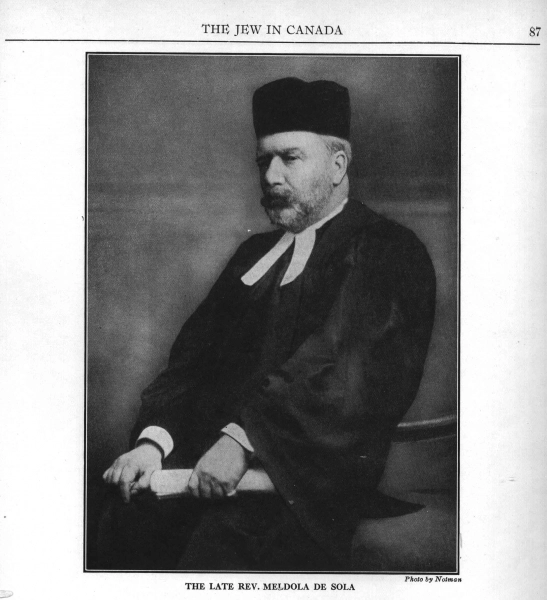
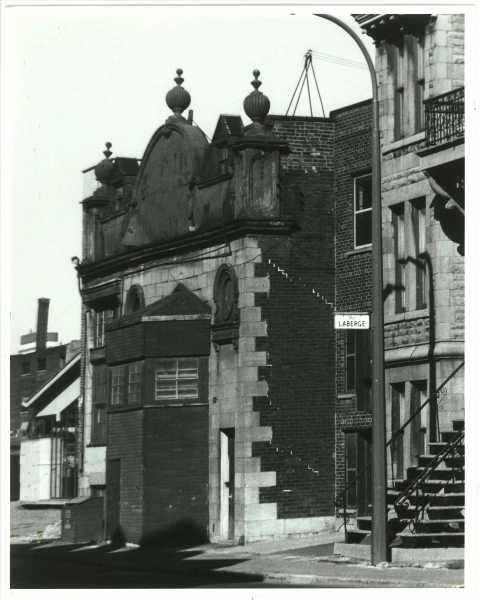
Founded in 1890 through a donation from the Baron de Hirsch Institute, the Baron de Hirsch School was dedicated to offering tuition-free public education to the children of Jewish immigrants and the poorest members of the community. The Shearith Israel School, for its part, was associated with Montreal’s affluent Spanish and Portuguese congregation. Under Reverend Meldola de Sola’s leadership, it struck an agreement with the Roman Catholic board to assure the school’s funding. Under this arrangement, Shearith Israel recovered 80% of the school taxes paid by Jewish taxpayers, while the Baron de Hirsch School was left to collect funds directly from the pockets of parents who were mostly tenants, and thus too poor to support it through taxes.
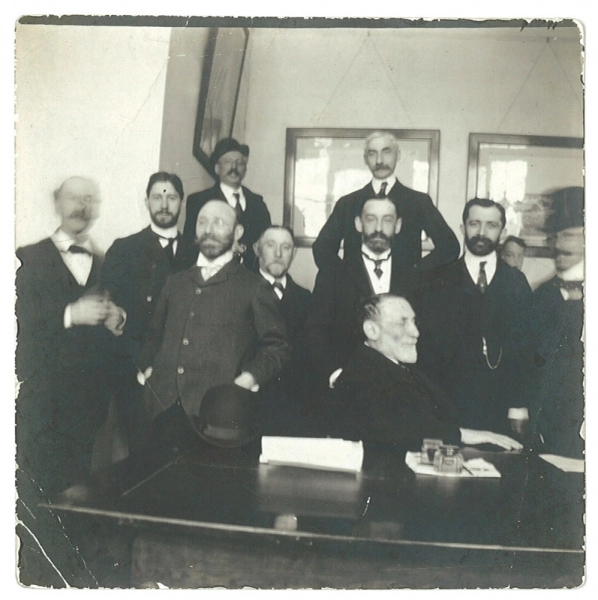
Tumultuous public negotiations ensued between the schools and their representatives. The well-to-do uptown Jews took up the defence of Shearith Israel, while the downtown immigrant community sided with the Hebrew Free School. This situation made visible the city’s uptown Jews’ embarrassment over the Jewish immigrants arriving from Eastern Europe. Under pressure from the Quebec government, Shearith Israel finally yielded in 1894, with the result that school taxes collected from Jewish property owners were assigned to the Protestant board for equitable redistribution. Given the wealth represented by the Spanish and Portuguese congregation, the Protestant board initially welcomed the integration of Jewish schools into its system as a source of increased revenue. However, massive Jewish immigration in the years to come would create new problems, and in the 1920s, controversy erupted once more over the administration of Montreal’s Jewish schools.
Hotly debated in the press, the dispute between the two schools had important repercussions for the Montreal Jewish community. Firstly, the controversy nourished a growing resentment toward Jews in the following decades. Moreover, the integration of Montreal Jews into the Protestant system eventually led to disagreements not only between Jews and Protestants, but between Jews and certain Quebec nationalists as well. The confrontation between Shearith Israel and Baron de Hirsch School also reflected a deeper malaise within the Jewish community itself, the result of social conflict between affluent and working class Jews. This conflict would persist until the second half of the 20th century.
Compiled by Valérie Beauchemin, translated by Helge Dascher.
Sources
August, David. The Genesis Period of the Jewish People’s School in Montreal. MA thesis. Concordia University, 1975. Print.
Rosenberg, Michael. M. Ethnicity, Community, and the State: the Organizational Structures, Practices and Strategies of the Montreal Jewish Community’s Day Schools System and its Relations with the Quebec State. Diss, Carleton University, 1995. Print.
Rome, David. The Education Legend of the Migration. Montreal: National Archives, Canadian Jewish Congress, 1991.
Tulchinsky, Gerald. Canada’s Jews: A People’s Journey. Toronto: University of Toronto Press, 2008.
Tulchinsky, Gerald. Taking Root: The Origins of the Canadian Jewish Community. Hanover: Brandeis University Press, 1993.